2025
Introducing solids and preventing risks: a complete guide for parents
Category (s):
Baby
Parenting
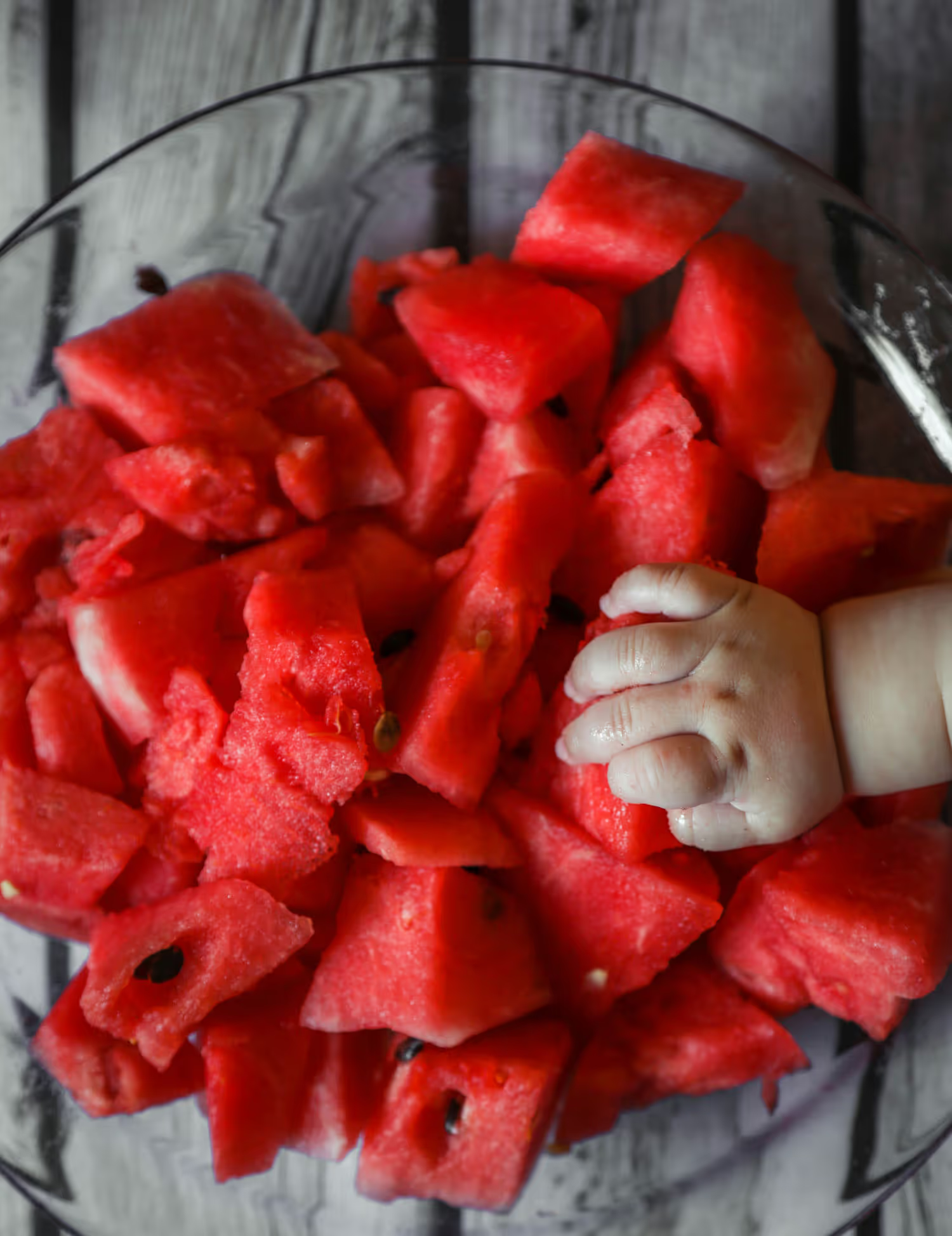
Preventing gagging and choking risks Little ones, especially during their first year of life, are at risk of choking on food. That is why it is important to know the prevention measures and to know how to react in an emergency.
Gagging is a normal protective reflex that happens when a piece of food ends up too far back in the mouth before it has been chewed enough. The baby coughs, retches or spits the food out. It is a defence mechanism that protects against choking. Gagging is common and normal while a baby is learning to eat.
Choking happens when a piece of food completely blocks the airway. The baby can no longer breathe, cough or cry. This is a medical emergency that requires immediate action.
Some foods carry a higher choking risk for children under 4:
To reduce the risks, prepare foods properly:
Learn to recognize the signs of real choking:
Do NOTHING. Let them cough to expel the food. Coughing is the best mechanism for clearing the airway. Stay calm and keep watching.
For a baby under 1 year: Give 5 back blows (between the shoulder blades) Give 5 chest thrusts Alternate until the object is expelled Call 911 if the obstruction persists For a child over 1 year: Perform the Heimlich manoeuvre Call 911 if the obstruction persists IMPORTANT: Take a resuscitation and first aid course for babies and children.
All parents and caregivers should take training in: CPR (cardiopulmonary resuscitation) for infants and children Airway clearing manoeuvres Paediatric first aid These courses give you the skills to respond effectively in an emergency.
Baby-led weaning does not increase the risk of choking when it is done safely: Wait until your baby is ready (around 6 months) Offer pieces of an appropriate size and texture Avoid high-risk foods Follow safe preparation principles Always watch closely
Myth: Purees are safer than pieces Reality: Well-prepared pieces are safe and help your baby learn to chew Myth: You should give water if your baby is choking Reality: NEVER give anything to drink during a choking episode, it can make the situation worse Myth: You should put your fingers in the mouth to remove the food Reality: Only put your fingers in the mouth if you can clearly see the object and can grasp it easily
To be ready: Stay calm, your child takes their cue from you Mentally rehearse the emergency manoeuvres Keep emergency numbers within reach Tell all caregivers about the safety rules Refresh your knowledge regularly
To prevent the risks: Prepare all foods properly ALWAYS supervise during meals Sit your baby fully upright Create a calm environment Avoid high-risk foods Take a first aid course Stay calm and prepared Food safety is essential, but it should not stand in the way of exploring and enjoying food. With the right precautions and knowledge, you can safely offer a wide variety of foods.
The prenato.ca website and the comprehensive information it contains are intended as practical tools for expectant and new parents, as well as for women throughout the various stages of their lives. This information is not intended to replace the skills, knowledge, or experience of qualified healthcare professionals who are familiar with the specific facts, circumstances, and symptoms of each individual. Consequently, Prenato and its staff cannot be held liable for any adverse effects or consequences resulting from the use of the information provided on this site. It is the user's responsibility to consult a physician or a qualified healthcare professional appropriate to their specific needs for any personal health concerns.
Immerse yourself in the adventure of your pregnancy and follow your baby's journey through our personalized emails. Every two weeks, receive updates that are unique and tailored to your pregnancy, allowing you to track your little one's growth and development stages. Take advantage of valuable advice and information to accompany each magical moment of this adventure!
Prenato needs the contact information you provide to us in order to contact you about our products and services. You can unsubscribe from these communications at any time. See our Privacy Policy to learn more about how we unsubscribe, as well as our privacy policies and our commitment to protection and privacy.

From motherhood to menopause, Prenato accompanies each stage of your life with kindness, expertise and innovation.