


Benefits
Why choose Prenato?


Diagnosis, treatment and solutions adapted to improve your circulation and your well-being.
Phlebology focuses on the diagnosis and treatment of venous diseases, especially varicose veins, circulation disorders, and venous insufficiency. These conditions, which are often marked by symptoms such as heavy legs, pain, or swelling, can affect quality of life.
At Prenato, our phlebology experts offer personalized solutions to improve blood circulation and effectively treat these problems, thus promoting the comfort and well-being of each patient.
This service is offered to both women and men.
Seeing a phlebologist is essential if you suffer from varicose veins, heavy legs, or leg pain or swelling. These symptoms may indicate venous disorders that, if left untreated, can lead to more serious complications such as ulcers or thromboses.
Our phlebology experts offer you personalized solutions to improve blood circulation and effectively treat these problems.
Seeing a phlebologist is essential if you suffer from varicose veins, heavy legs, or leg pain or swelling. These symptoms may indicate venous disorders that, if left untreated, can lead to more serious complications such as ulcers or thromboses.
Our phlebology experts offer you personalized solutions to improve blood circulation and effectively treat these problems.
What is phlebology?

Phlebology is the medical specialty that focuses on the diagnosis and treatment of venous diseases, especially varicose veins, circulation disorders, and venous insufficiency. These conditions, which are often marked by symptoms such as heavy legs, pain, or swelling, can affect quality of life.
Why consult a phlebologist?
The phlebologist specializes in the evaluation and treatment of these problems, offering adapted solutions to improve blood circulation and relieve discomfort. Early consultation helps to prevent the worsening of symptoms and to quickly regain better comfort.
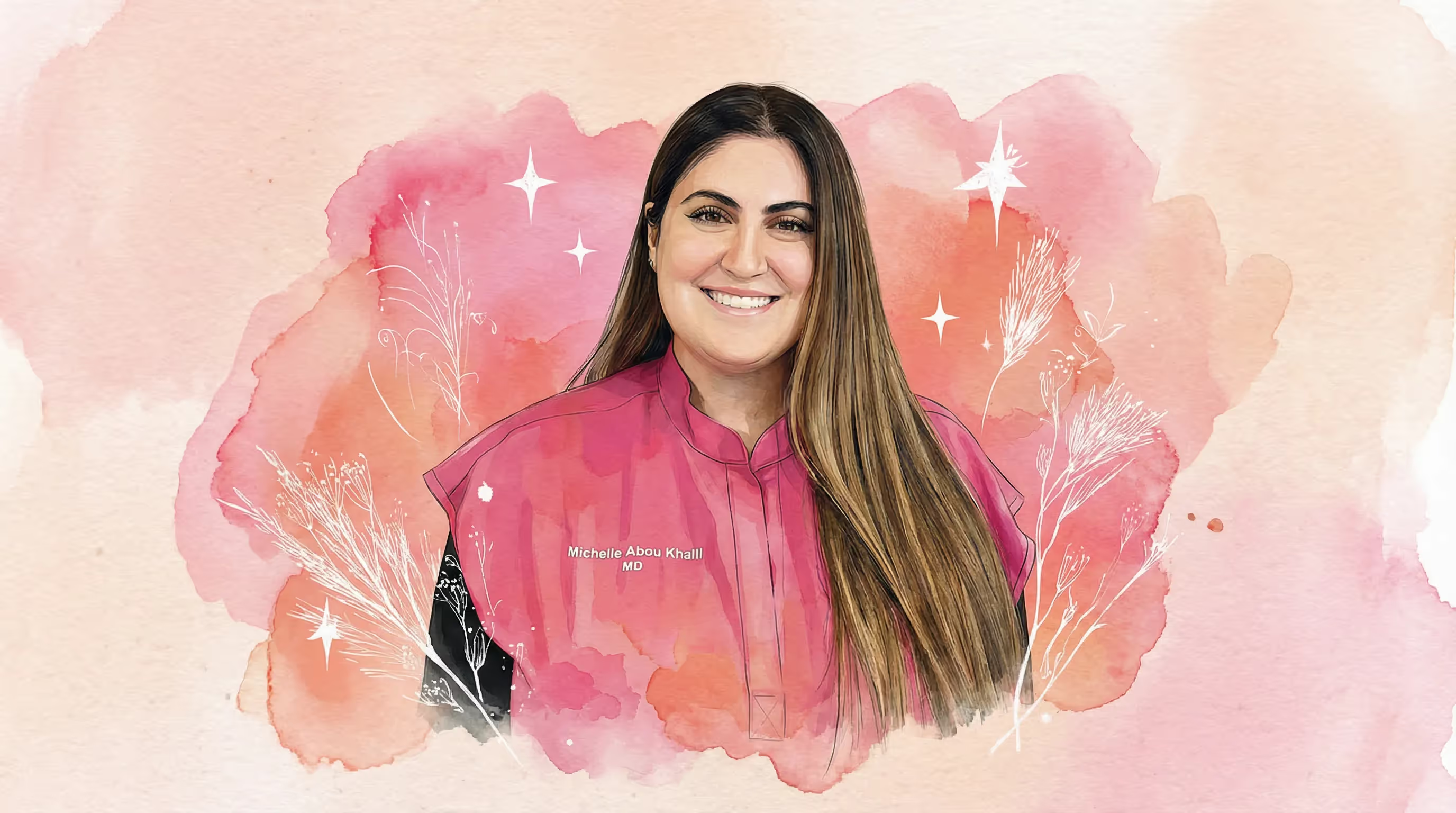
With several years of experience in the field, Dr. Abou Khalil uses her knowledge in phlebology at our Blainville clinic.
Through detailed evaluations, Dr. Abou Khalil ensures accurate diagnoses in order to guide personalized treatment plans. Take advantage of innovative and effective solutions to treat varicose veins and spider veins, restore venous health and regain comfort in your legs.
Qu’est-ce que c'est des varices?
Le système veineux humain est divisé en deux composantes principales : le système veineux superficiel et le système veineux profond. Le système veineux profond est responsable de ramener 90% du sang vers le cœur, alors que le système veineux superficiel s’occupe de ramener le 10% résiduel. Ces deux systèmes sont interconnectés, mais jouent des rôles distincts dans la circulation sanguine.
Les varicosités et les varices sont deux manifestations différentes des troubles veineux superficiels, bien que souvent confondues. Comprendre ces distinctions est essentiel pour un diagnostic précis et un traitement approprié.
Les varicosités :
Les varicosités sont de petites veines dilatées, visibles à la surface de la peau, souvent en forme de fines lignes rouges ou bleues.
Elles résultent souvent de la dilatation de très petites veines de diamètre inférieur à 1 mm. Bien qu’elles puissent être inesthétiques, les varicosités ne sont généralement pas douloureuses.
Les varices :
Les varices, d’autre part, sont des veines plus larges et plus enflées. Elles peuvent être ressenties sous la peau et sont souvent associées à une sensation de lourdeur, de douleur ou de fatigue dans les jambes. Les varices sont le résultat d’une maladie veineuse chronique, où les valves des veines ne fonctionnent pas correctement et ne ramènent pas efficacement le sang vers le cœur.
Ceci entraine une accumulation de sang dans les veines atteintes et ainsi une dilatation des vaisseaux. Les varices nécessitent une attention médicale plus approfondie et peuvent être traitées par diverses méthodes, allant de la sclérothérapie à la chirurgie.
Les symptômes associés aux varices
Voici quelques symptômes couramment associés aux varices :
What are the risk factors?
Certain risk factors may contribute to the development of varicose veins and varicosities.
These factors can be divided into two categories: genetic factors and lifestyle factors.
Genetic factors:
Lifestyle Factors:
What if varicose veins are not treated?
Failure to treat varicose veins over time can lead to several complications and health risks.
Some of the risks associated with a long-term untreated varicose vein include:
It's important to note that everyone reacts differently to varicose veins, and risks vary based on a variety of factors such as genetics, age, gender, and lifestyle.
Venous disease is a chronic and progressive disease. Regular follow-up in phlebology is essential to assess the evolution of venous disorders, adjust treatments if necessary, and prevent possible complications.
Venous disease is a chronic and progressive disease. Regular follow-up in phlebology is essential to assess the evolution of venous disorders, adjust treatments if necessary, and prevent possible complications.
What types of treatments are offered in phlebology?
Conservative measures:
Venous surgery (not available at Prenato):
Complementary approaches:
What are the pre-sclerotherapy recommendations?
Pelvic congestion syndrome, also known as pelvic congestion or pelvic venous insufficiency, is a collection of symptoms that result from impaired venous blood flow in the pelvic region. It occurs when the veins in this area don't work properly, causing blood to build up in the pelvic veins that causes unpleasant symptoms.
Pelvic congestion syndrome, also known as pelvic congestion or pelvic venous insufficiency, is a collection of symptoms that result from impaired venous blood flow in the pelvic region. It occurs when the veins in this area don't work properly, causing blood to build up in the pelvic veins that causes unpleasant symptoms.
What are the possible symptoms of pelvic congestion syndrome?
Who can be affected by pelvic congestion?
It is a venous disease that affects especially women of childbearing age who had, in general, at least one pregnancy. During pregnancy, the veins dilate, which can cause pelvic varices, which can cause very disturbing symptoms.
This is a condition that is unfortunately underdiagnosed at present, as the symptoms can be attributed to other gynecological or pelvic conditions.
It is estimated that this disease would affect up to 30% of women presenting with chronic pelvic pain in which no other obvious pathology is found.
*Note: A $30 fee will be applied when the file is opened and analyzed. A valid prescription is required for all screening tests.
Family physician
Why choose Prenato?

Our team of doctors, gynecologists, technologists and nurses has been supporting women for over 10 years.

Each woman is unique. We adapt our follow-ups and advice to your age, your needs and your health priorities.

Fast DNA screening, 3D/4D ultrasounds and digital tools for reliable and modern monitoring.

Our clinics offer a reassuring, human and attentive environment, designed for the comfort of patients and their families.

More than 100,000 families supported in Quebec attest to the quality and humanity of our services.

Fast online appointment scheduling, teleconsultations available and clinics in several regions.

From motherhood to menopause, Prenato accompanies each stage of your life with kindness, expertise and innovation.