










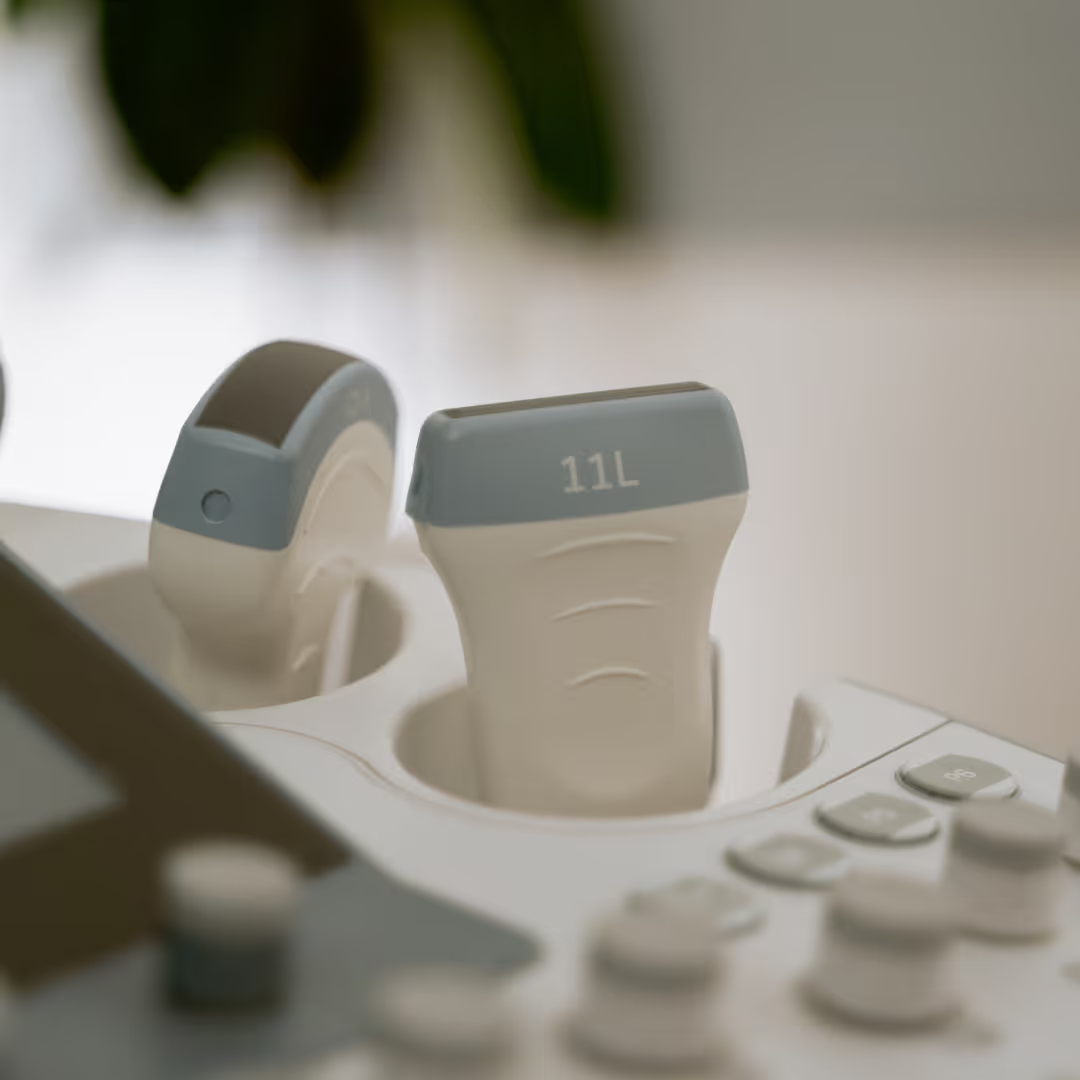
Follicular follow-up ultrasound monitors ovulation during fertility treatment.


Whatever your path to parenthood, Prenato is there to support you.
Each journey to parenthood is unique. Some of these courses are smooth and unhindered while others are full of questions, concerns and require personalized support. Whether it is to support you in this life project that is parenting or to try to find the medical causes that delay your dream of becoming a parent, Prenato is there for you.
Please note that we are not a fertility clinic and we do not offer assisted reproduction services (IVF, insemination).
This service is for people who are trying to conceive without success or who have a history of repeated miscarriages (> 2).
This service is for people who are trying to conceive without success or who have a history of repeated miscarriages (> 2).
What are the criteria for receiving a fertility consultation?

Couples where one member has a chromosomal anomaly, a known health condition that may affect fertility, or whose woman is nearly 39 years of age or older should go directly to a fertility clinic.
How does this consultation take place?
During your initial consultation, our medical team will conduct a detailed assessment of your medical history, family history, and lifestyle. Specialized tests, for the couple, could be recommended in order to identify underlying medical conditions that may affect fertility or lead to abortions, if appropriate.
Depending on this assessment, certain treatments may be proposed, such as the initiation of specific medications to regulate the menstrual cycle, stimulate ovulation or correct other factors that may influence fertility. These treatments are adapted to each patient in order to maximize the chances of natural conception.
However, in some cases where initial treatments prove to be insufficient, a referral to a fertility clinic may be offered. More advanced solutions, such as medically assisted procreation or intrauterine insemination, are then available there.
This service is for people who are planning a pregnancy in the near future and who want to prepare for it in a thoughtful and informed manner.
No prescription is required for this service.
This service is for people who are planning a pregnancy in the near future and who want to prepare for it in a thoughtful and informed manner.
No prescription is required for this service.
How does a meeting take place?
During this consultation, you will meet with a nurse who will take the time to assess your history and lifestyle habits and discuss with you the various elements that may have an impact on your fertility and the start of your pregnancy. This meeting aims to offer personalized support, practical advice and valuable information to promote an optimal start of pregnancy.
This will allow you to get clear answers to your questions and better understand the steps before and after design.
What topics will be discussed during a meeting?
Often called basic ultrasound or follicular count, this ultrasound makes it possible to assess the uterus and its appendages (ovaries) between day 2 and 5 of the menstrual cycle.
It is an ultrasound that is performed endovaginally.
In particular, this ultrasound makes it possible to:
Ovarian reserve naturally decreases with age, but it varies from woman to woman. Age alone is therefore not a reliable indicator. It is often combined with blood tests (FSH, LH, Estradiol, Inhibin B, AMH) for a comprehensive evaluation.
Often called basic ultrasound or follicular count, this ultrasound makes it possible to assess the uterus and its appendages (ovaries) between day 2 and 5 of the menstrual cycle.
It is an ultrasound that is performed endovaginally.
In particular, this ultrasound makes it possible to:
Ovarian reserve naturally decreases with age, but it varies from woman to woman. Age alone is therefore not a reliable indicator. It is often combined with blood tests (FSH, LH, Estradiol, Inhibin B, AMH) for a comprehensive evaluation.
This ultrasound is used to measure the thickness of the endometrium and assess mature follicles (number and size).
This test is usually requested before an egg puncture or an embryo transfer.
It is an ultrasound that is performed endovaginally.
This ultrasound is used to measure the thickness of the endometrium and assess mature follicles (number and size).
This test is usually requested before an egg puncture or an embryo transfer.
It is an ultrasound that is performed endovaginally.
Why do this ultrasound?
Performed under medical prescription and endovaginally, this ultrasound makes it possible to follow the evolution of the follicles during the cycle.
It is usually done around day 10 of a 28-day cycle, then repeated every 2 days in order to:
The report is then sent to your doctor in order to adjust the treatment as needed.
Generally, ovarian reserve ultrasound does not have to be repeated every cycle, unlike follicular monitoring, which is adapted according to the results obtained.
This is a medical imaging procedure to determine whether or not there is a blockage in the fallopian tubes, by injecting liquid or air into them.
This is a medical imaging procedure to determine whether or not there is a blockage in the fallopian tubes, by injecting liquid or air into them.
How does the exam take place?
You will first be installed in a gynecological position in order to take the first images. A speculum is then inserted to allow the cervix to be cleaned and disinfected, then a catheter with a small balloon is gently put in place.
Afterwards, a mixture of liquid and air is gently injected, followed by new imaging to observe the passage through the tubes. This examination makes it possible to visualize the shape of the uterus, to detect possible abnormalities (such as polyps, fibroids or adhesions) and to assess the circulation of fluid in the tubes.
What can happen after the exam
After the exam, it is possible to experience mild cramps, slight bleeding, or, more rarely, shoulder pain. These symptoms are usually short lived and go away quickly. However, it is recommended that you consult your doctor if you experience persistent pain, fever, or abnormal discharge.
Like any medical exam, some risks should be considered, although they remain rare, such as mild discomfort, cramps, a vagal reaction or an infection.
This examination is contraindicated in case of ongoing pregnancy or active gynecological infection.
What should I do if I think I am pregnant?
Obviously, this procedure could not be done if there is a chance that you are pregnant. First, the examination is carried out at a specific point in the cycle. In all cases, a urine pregnancy test should be performed prior to the procedure. In addition, you must avoid an unprotected sexual relationship in the 5 days preceding the intervention.
Is the procedure painful?
Some women will experience sharp pain and others will experience simple discomfort. We recommend taking 2 acetaminophens and 2 ibuprofens (if you have no contraindications to taking these medications) 1 hour before the appointment.
We also strongly suggest that you be accompanied during the appointment.
Prenato can carry out your blood tests that will be prescribed at the time of your journey, in order to allow the evaluation of your fertility.
Variable price according to the prescription of your professional.
Prenato can carry out your blood tests that will be prescribed at the time of your journey, in order to allow the evaluation of your fertility.
Variable price according to the prescription of your professional.
Carrier screening allows parents-to-be, including individuals using sperm donors or egg donors, to identify the potential risks of hundreds of genetic diseases in their future child. This genetic test done before or during pregnancy can screen for more than 500 genes. Note that even without a family history of genetic disease, it is possible to be a carrier of a serious genetic condition and to be at risk of having a child with this condition. Carrier individuals generally have no symptoms and that is why a carrier test for genetic diseases can be important.
Carrier screening allows parents-to-be, including individuals using sperm donors or egg donors, to identify the potential risks of hundreds of genetic diseases in their future child. This genetic test done before or during pregnancy can screen for more than 500 genes. Note that even without a family history of genetic disease, it is possible to be a carrier of a serious genetic condition and to be at risk of having a child with this condition. Carrier individuals generally have no symptoms and that is why a carrier test for genetic diseases can be important.
How does analysis work?
We work with clinical laboratories that are accredited to perform medical genetic analyses.
A genetic test evaluates the gene sequence to find variants, like reading a book to find spelling errors. We all have genetic variants, not all of them are problematic. Some variants, called pathogenetic variants or mutations, have a significant impact on gene function and are associated with disease.
Who can benefit from this package?
Genetic diseases tested
Each of us is a carrier of at least one genetic condition. Even though we have no symptoms or family history of this disease, we still have a modified copy of this gene. When both parents carry a variant (or “mutation”) in the same gene, their children have a 25% risk of developing this disease, regardless of gender. That's what we call the autosomal transmission recessive.
Other diseases are transmitted by a surrogate mother (X-linked transmission) and generally affect their boys.
The extended carrier test covers hundreds of genetic diseases including those with a high frequency in certain populations subject to the founder effect (e.g.: Ashkenazi Jewish origin, origin of Charlevoix/Saguenay Lac-Saint-Jean). The diseases tested are generally severe with early onset, with or without available treatments, but some may show some variability and expression in adulthood. Here is an example of some of the conditions that are part of the panel:
Why do genetic counseling?
Genolife's genetic experts help you understand your risks and options to make the best decisions about reproductive risks. Our genetic counsellors can talk to you about:
What are the steps in the process?
The process will take place in 3 steps:
1) Pre-test webinar and consent
After payment confirmation, you will have access to our secure online portal to listen to a pre-recorded webinar by one of our genetic counsellors. This webinar will provide you with all the information you need to make an informed decision about the analysis, including the limitations of the results*. A consent will need to be signed in the portal to access the test.
2) Saliva sample analysis
You will receive a saliva sample kit at your home that you will then have to send back to the laboratory via a prepaid envelope. It may take up to 21 business days for your sample to be analyzed.
3) Post-test genetic counseling
Once the results are available, you will meet with one of our certified genetic counsellors by phone or video conference. She will explain the results to you in detail and discuss the implications for you and your family members. If a reproductive risk is identified, our genetic counsellor will discuss the risks, disease, and treatment options (if available) as well as reproductive options in detail. You will receive a summary letter with a copy of your results. If you are in the context of choosing a gamete donor, please note thatOne only donor genetic profile can be evaluated under this package.
*If you have a personal and/or family history of genetic disease, pre-test genetic counseling is recommended, and a negative result following the analysis will not guarantee that you can reduce or eliminate the reproductive risk associated with this history.
*Note: A $30 fee will be applied when the file is opened and analyzed. A valid prescription is required for all screening tests.

We offer several ultrasound services that will be prescribed during your journey.
Ultrasounds help you better understand your fertility and optimize your chances of conceiving. They allow us to assess key elements of your reproductive health, such as the ovaries, uterus, endometrium, and follicle development throughout the cycle.
At Prenato, this ultrasound is part of a human, professional and reassuring approach, to support you at every stage of your journey.
Follicular follow-up ultrasound monitors ovulation during fertility treatment.

Get a prescription for your viability or dating ultrasound at Prenato.
Infirmière clinicienne - Clinique Québec
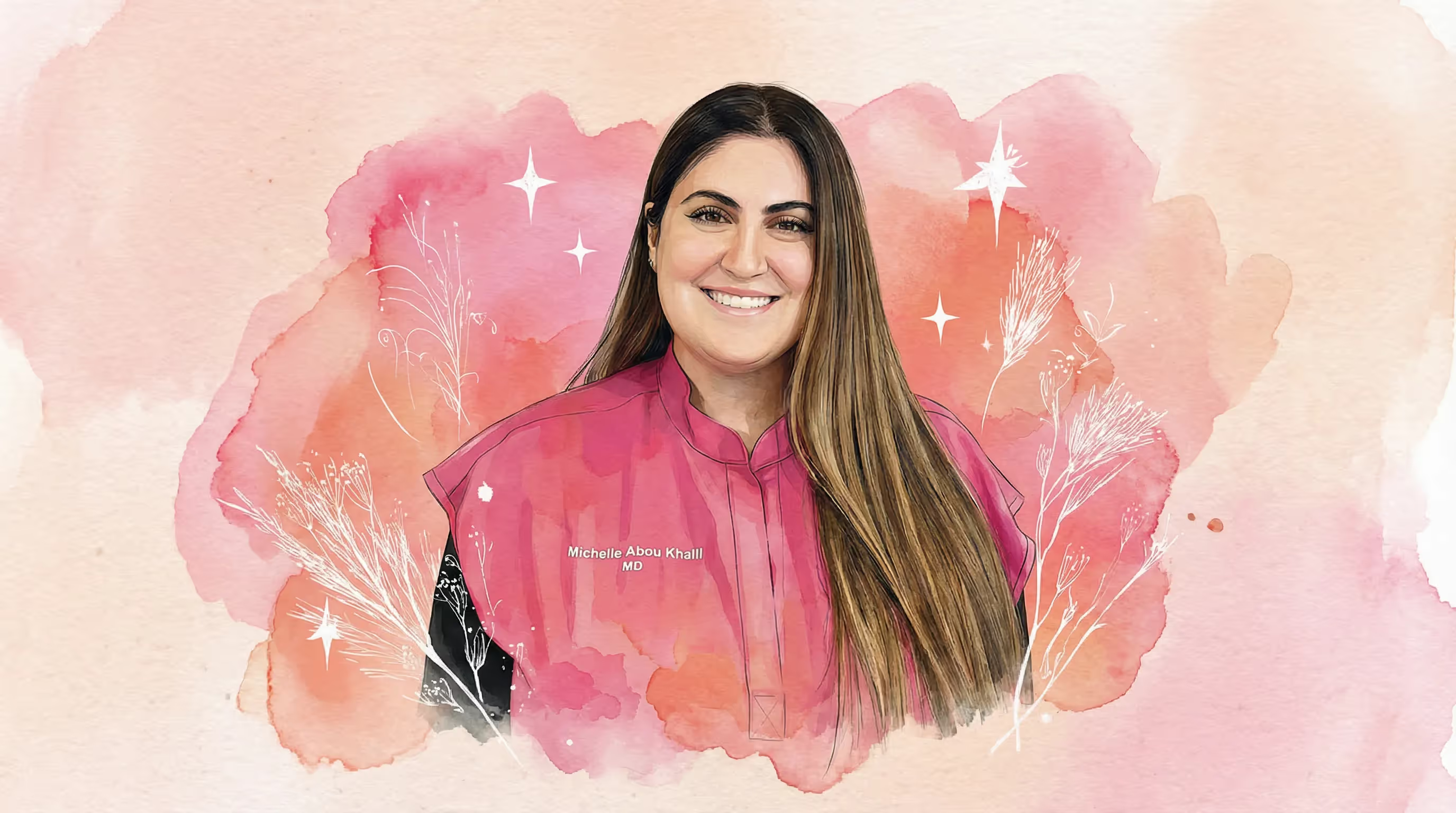
Family physician
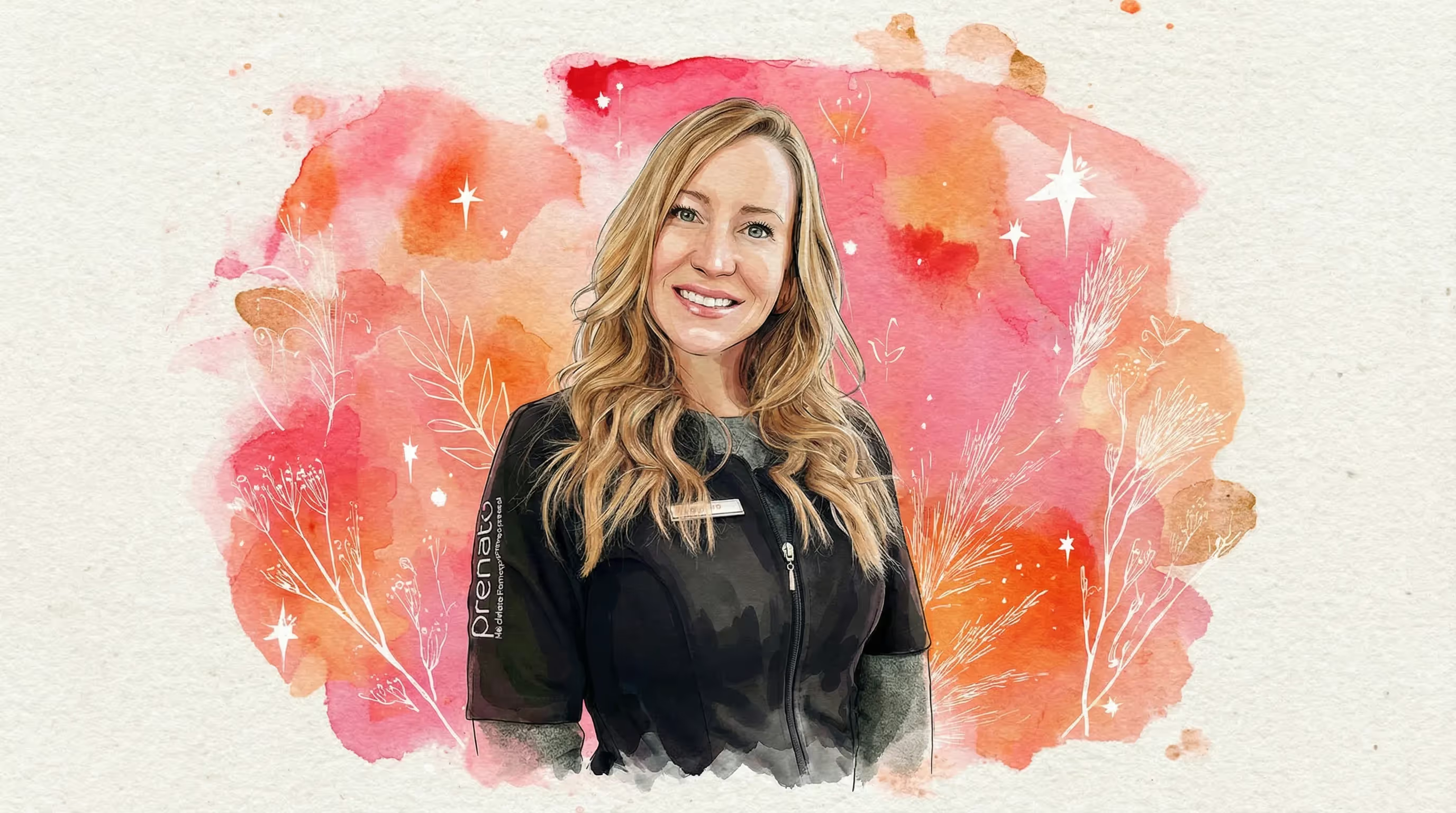
Lead nurse - Vaudreuil Clinic

Specialized nurse practitioner

Genetic counselor

From motherhood to menopause, Prenato accompanies each stage of your life with kindness, expertise and innovation.