
2026
Lyme disease
Category (s):
Baby
Pregnancy
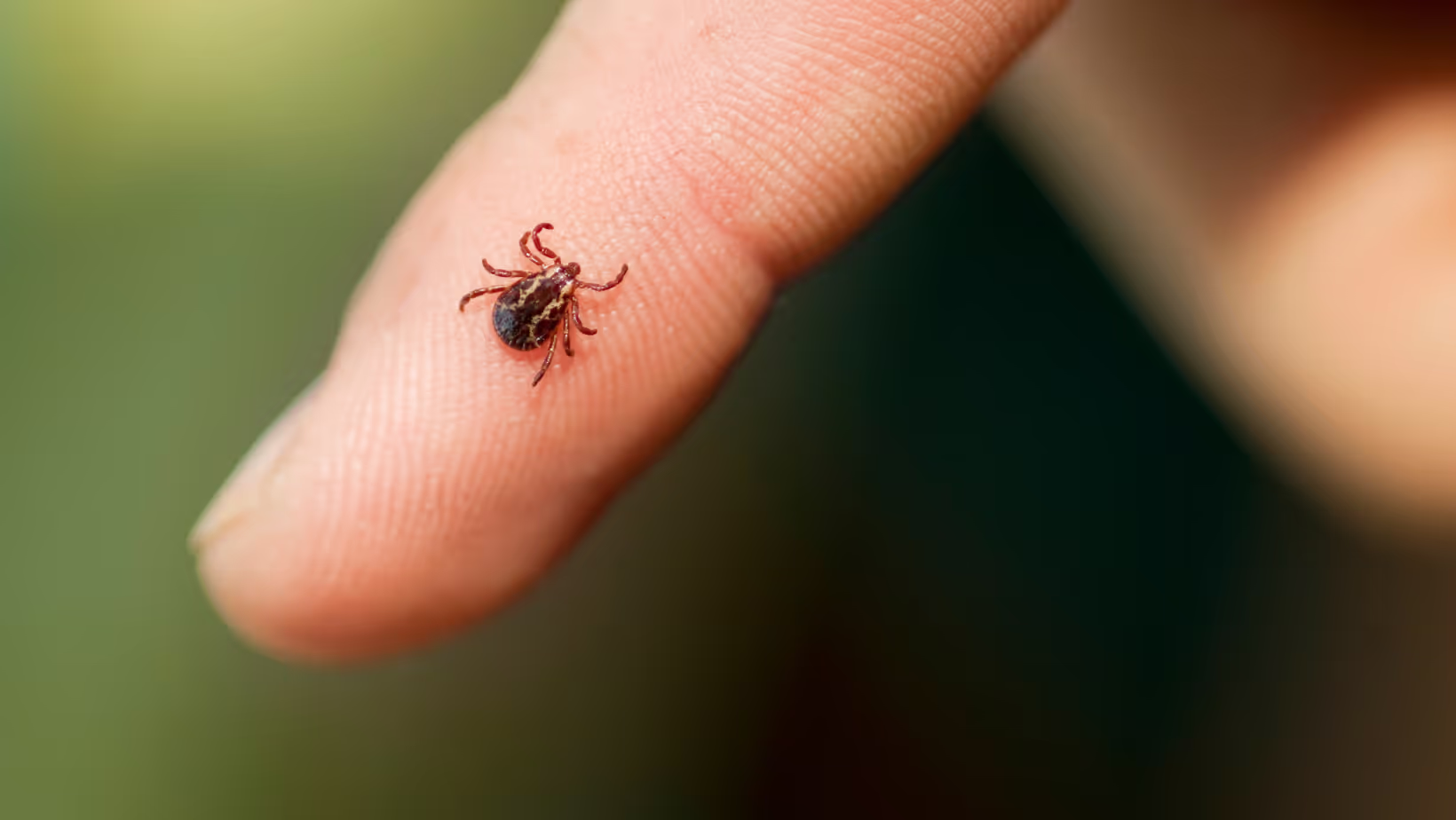
No one is safe from being bitten by a tick on a beautiful summer day. Here are more details about Lyme disease, given that the blacklegged tick, the one that transmits this illness, is increasingly present in Quebec.
Ticks are showing up more and more in Quebec. Did you know that there are 12 species of ticks in the province? And fortunately, only 1 species can carry Lyme disease. The culprit: the blacklegged tick, or Ixodes scapularis. It infects humans by transmitting the bacterium Borrelia burgdorferi, the agent responsible for Lyme disease.
These creatures can live in the city as well as in the country, and are found more in tall grass, dead leaves, wooded areas or the forest, and they can be active at any hour of the day or night. They can bite and infect a person as soon as the temperature reaches 4°C. Ticks are also more present in certain regions of Quebec, such as Estrie, Lanaudière, Mauricie-Centre-du-Québec, Montérégie, Montreal, Outaouais, Laval and the Laurentians.
When it comes to the symptoms used to identify Lyme disease, the most common ones are:
Some of these symptoms can last up to 6 months even when they have been treated quickly (post-Lyme syndrome).
What is unusual about the symptoms of Lyme disease is that other signs can appear several weeks and even several months after the bite, if the infection was not diagnosed and treated quickly.
Taking the outdoor temperature into account, these measures should be applied between April and November, or at least as soon as the thermometer reaches 4°C.
You can use fine tweezers, such as eyebrow tweezers, or better still, a tick remover. Avoid using your fingernails to remove it as much as possible.
If you were bitten in Canada or the United States, call 811 (Info-Santé, Quebec's free health information line) to tell the nurse about your situation, and she will refer you to a health professional if needed, based on her assessment. An antibiotic could be prescribed as a preventive measure, and do not forget to bring the tick with you if you have to be seen.
In closing, there is no need to be fearful either, once you know the precautions to take. It becomes clear that they are easy to apply and that you can keep enjoying your outdoor activities without worry!
Here are also two official sources to learn more about the subject:
The prenato.ca website and the comprehensive information it contains are intended as practical tools for expectant and new parents, as well as for women throughout the various stages of their lives. This information is not intended to replace the skills, knowledge, or experience of qualified healthcare professionals who are familiar with the specific facts, circumstances, and symptoms of each individual. Consequently, Prenato and its staff cannot be held liable for any adverse effects or consequences resulting from the use of the information provided on this site. It is the user's responsibility to consult a physician or a qualified healthcare professional appropriate to their specific needs for any personal health concerns.
Immerse yourself in the adventure of your pregnancy and follow your baby's journey through our personalized emails. Every two weeks, receive updates that are unique and tailored to your pregnancy, allowing you to track your little one's growth and development stages. Take advantage of valuable advice and information to accompany each magical moment of this adventure!
Prenato needs the contact information you provide to us in order to contact you about our products and services. You can unsubscribe from these communications at any time. See our Privacy Policy to learn more about how we unsubscribe, as well as our privacy policies and our commitment to protection and privacy.

From motherhood to menopause, Prenato accompanies each stage of your life with kindness, expertise and innovation.