2025
Perinatal Depression: Recognizing the Signs
Category (s):
Postpartum
Pregnancy
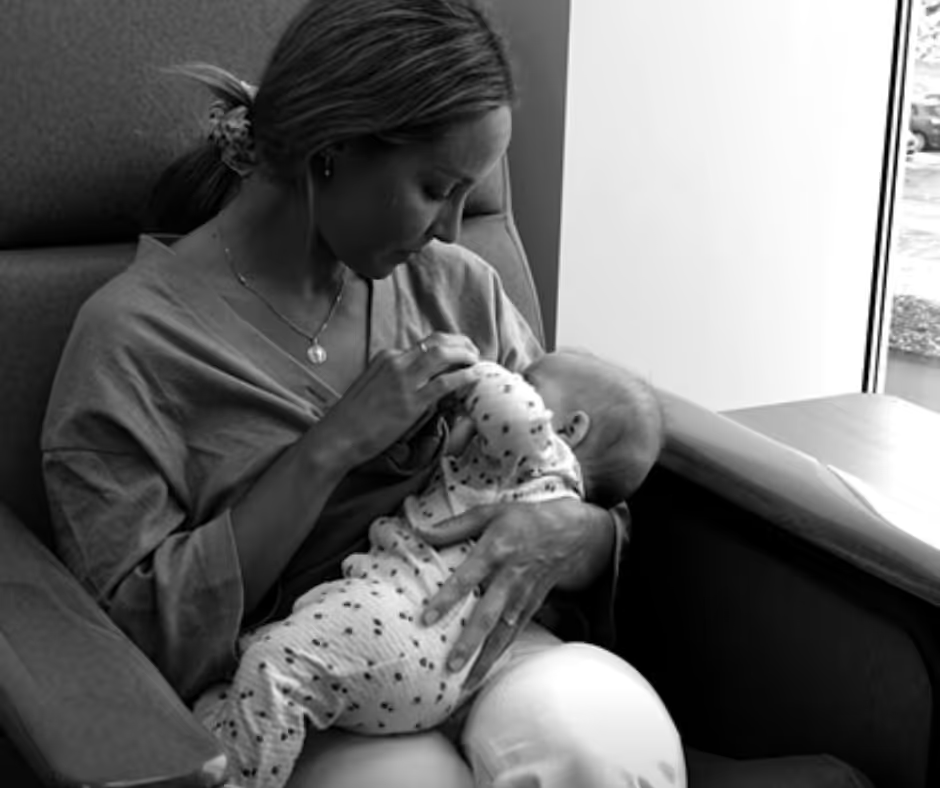
Did you know that perinatal depression affects 1 in 5 women?
This is not surprising when you see all the pressure on their shoulders from an early age. We live in a high-performance society that imposes standards that are completely disconnected from the reality of future and new mothers. Whether in connection with speed of conception, professional balance, body image or even maternal productivity; women are experiencing more and more guilt in connection with their inability to respond to what society — and themselves — imposes on itself. It is not for nothing that about 10% of women suffer from perinatal depression and 15-20% from postnatal depression.
Pregnancy is generally a time of great happiness. However, for many, pregnancy is a source of stress and worry. Some women are going to feel depressed without really knowing why. Several factors are involved, including antecedents. A woman who has already suffered from depression is more likely to experience depression again, especially during a major physical and emotional upheaval such as pregnancy. Other factors, such as single parenthood, financial instability, or a weak support network, can increase the risk of perinatal depression.
Difficulty conceiving also has a major impact on women's mental and emotional health. Waiting lists, invasive gynecological exams, repeated injections, hormonal treatments, surgeries, miscarriages... We are far from the sweetness of natural conception. When they do end up pregnant, these women experience a lot of fears, including the fear of losing their long-awaited baby. Which is completely normal! It is important to have support in order to verbalize your fears and get reliable answers to your concerns. A friend who has been there, a birth assistant, a nurse, a psychologist... no matter who, find a pregnancy ally to accompany and support you.
There are several other factors that can lead to perinatal depression. Living far from your family, having a partner who works a lot and who is not very present at home, limited financial resources, the impact of a surprise pregnancy in an already complete family, a multiple pregnancy, the lack of support from those around you, poor health or a risky pregnancy with numerous medical follow-ups, etc. These are all sources of stress that can lead to depression during pregnancy.
However, it should be mentioned that in some cases, everything is fine. No particular signs of stress or cause for concern, but still, things are not going well. That too is possible, and know that you are normal. Depression can happen at any time and doesn't need a specific reason.
If you feel depressed, sad, and this feeling takes up all the space, especially do not hesitate to talk to your health professional (family doctor, midwife, gynecologist-obstetrician...).
Postpartum depression is more serious than the baby blues and requires medical attention. It is a depression that can happen at any time during the first year after giving birth, but the rate is higher during the 4thE trimester (the 3 months after the birth of the baby). You should know that it is possible to have depressive symptoms without suffering from postpartum depression. This is in fact the case for about 40% of women during the period of 3 to 6 months after delivery.
The difference between a transient depressive state and postpartum depression is the accumulation and duration of symptoms. If you have several of the following symptoms and they have been going on for several weeks/months, it is important to see your healthcare professional. There is no shame in seeking help; on the contrary, it is the best thing you can do for your well-being and that of your family.
- Deep sadness for no apparent reason
- Frequent unexplained crying
- Permanent exhaustion or sleep problems (sleeping too much or not enough)
- Excessive feelings of worthlessness or guilt (feeling like a bad parent, difficulty establishing a bond with your baby)
- Irritability
- Extreme anxiety (especially when it comes to the well-being of your child)
- Inability to take care of your child properly or unwillingness to spend time with them
- Ability to take care of your child, but with an absence of pleasure in doing so
- Disinterest in activities previously enjoyed or lack of enjoyment during them
- Appetite change
- Feeling that things will never get better
- Tendency to isolate yourself
- Suicidal ideas
Perinatal depression is still taboo in our society, but it is nevertheless very present. Don't wait to ask for help, it won't go away by itself. You need help.
If you feel the need to talk, our nurse clinicians are available for virtual meetings support to help you verbalize how you feel and guide you to follow-up if necessary.
If you are experiencing psychological distress and need help, contact the following support resources:
- Health info (available 24/7): 811
- Parents line: 1 800 361-5086
- Your family doctor, midwife, pregnancy doctor, gynecologist-obstetrician
- A psychologist: https://www.ordrepsy.qc.ca/accueil
The prenato.ca website and the comprehensive information it contains are intended as practical tools for expectant and new parents, as well as for women throughout the various stages of their lives. This information is not intended to replace the skills, knowledge, or experience of qualified healthcare professionals who are familiar with the specific facts, circumstances, and symptoms of each individual. Consequently, Prenato and its staff cannot be held liable for any adverse effects or consequences resulting from the use of the information provided on this site. It is the user's responsibility to consult a physician or a qualified healthcare professional appropriate to their specific needs for any personal health concerns.
Immerse yourself in the adventure of your pregnancy and follow your baby's journey through our personalized emails. Every two weeks, receive updates that are unique and tailored to your pregnancy, allowing you to track your little one's growth and development stages. Take advantage of valuable advice and information to accompany each magical moment of this adventure!
Prenato needs the contact information you provide to us in order to contact you about our products and services. You can unsubscribe from these communications at any time. See our Privacy Policy to learn more about how we unsubscribe, as well as our privacy policies and our commitment to protection and privacy.

From motherhood to menopause, Prenato accompanies each stage of your life with kindness, expertise and innovation.