


2025
Abnormal nuchal translucency ultrasound: what to do?
Category (s):
Pregnancy
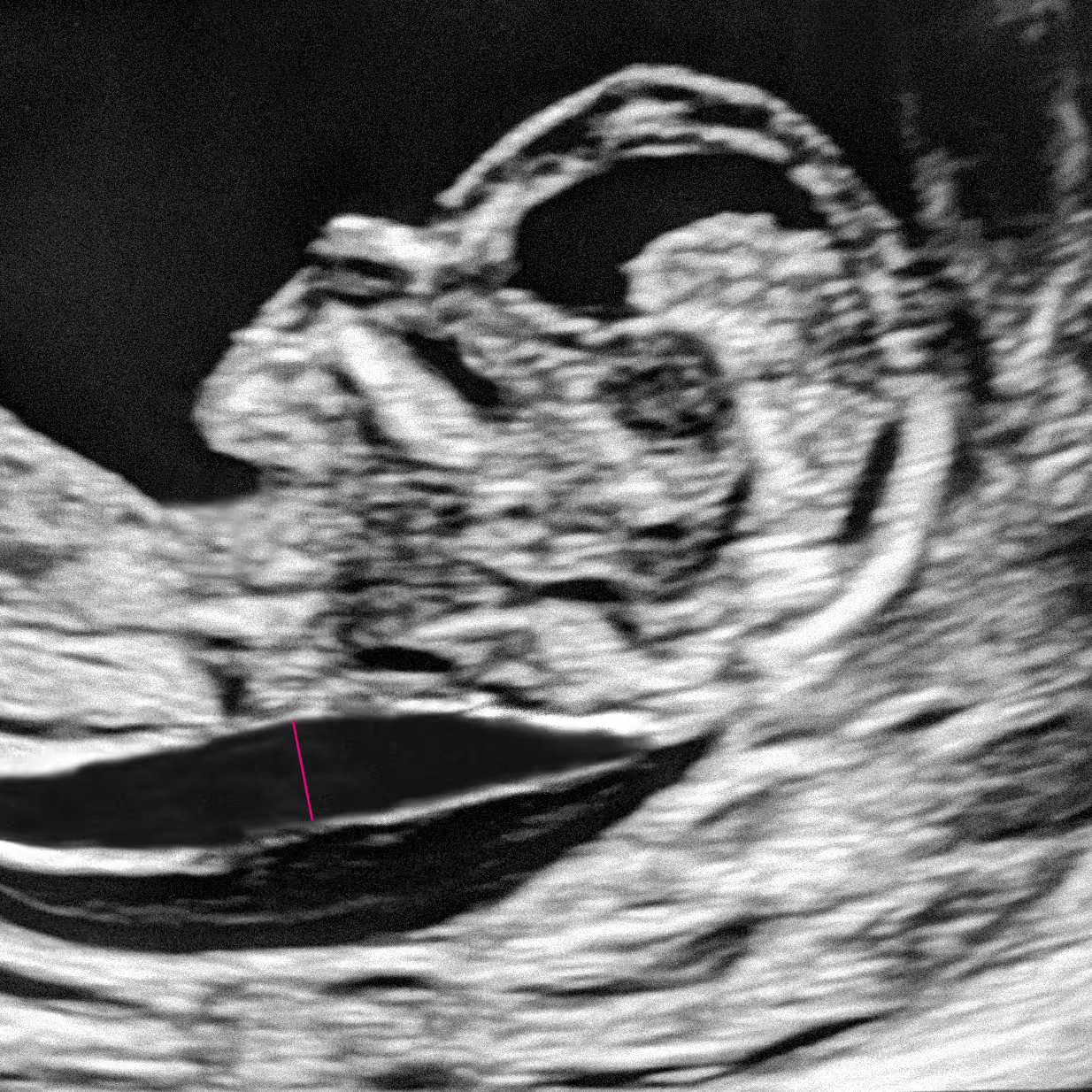
First trimester ultrasound, often called nuchal translucency, is performed between 11 weeks 4 days (11 4/7) and 13 weeks 6 days (13 6/7). Whether you have chosen to do prenatal fetal DNA screening, serum marker screening, or no screening, this ultrasound is recommended by the Society of Obstetrician-Gynaecologists of Canada for all pregnant women. In addition to determining the gestational age of your pregnancy (dating ultrasound) and to assess the morphology of your baby, ultrasound allows the measurement of nuchal translucency.
Nuchal translucency is a subcutaneous space, at the level of the neck, which is located between the skin and the vertebral column of the fetus. This space generally measures between 0.9 and 3 mm. By performing the first trimester ultrasound, it is possible for the technologist to measure nuchal translucency in the fetus. The ultrasound must be performed by professionals with the necessary certifications since it is a very complex ultrasound to perform.
A nuchal translucency that is thicker or larger than normal can be identified during a first-trimester ultrasound. The Society of Obstetrician-Gynaecologists of Canada recommends prenatal diagnosis if the nuchal translucency measurement is greater than 3.5 mm. A thickened nuchal translucency measure increases the risk of certain abnormalities in the fetus. While everything may be normal, this abnormal or atypical measurement may also suggest a greater risk of a fetal anomaly.
After reading the ultrasound report, your attending professional who monitors your pregnancy will make certain recommendations. Although a thicker nuchal translucency may increase the risk of a chromosomal defect or heart defect, among other things, this measurement is not a diagnosis.
In several cases, a prenatal fetal DNA screening can be offered to future parents, since it allows rapid and accurate analysis (up to 99.9%) of trisomies, sex chromosome abnormalities and certain other genetic conditions ($). This blood test, which is safe, can also be performed under prescription as early as 10E pregnancy week. It will make it possible to determine the risk level of certain chromosomal abnormalities more accurately. It is a simple blood test from the mother's arm, which analyzes DNA from her placenta.
In some cases, carrying it out may make it possible to avoid an invasive prenatal diagnosis, such as amniocentesis or chorionic villus biopsy. However, it should be noted that in the presence of nuchal hyperclarity, fetal DNA could not replace the recommendation of a prenatal diagnosis. Of course, we recommend that you discuss this with your treating professional to determine if this applies to your situation.
Various methods may be offered to diagnose certain conditions in your fetus. La chorionic villus biopsy is an invasive diagnostic method that requires taking cells from the placenta. This technique is used approximately between the 10E And the 14E pregnancy week.
Amniocentesis, for its part, is generally carried out after the 16E week of pregnancy. This method makes it possible to collect amniotic fluid. By analyzing placenta cells or amniotic fluid, it will be possible to diagnose various genetic conditions or to eliminate the suspicion of them.
As they are invasive methods, these techniques can cause some complications, although these are infrequent. Both offer an analysis period with partial results in less than 7 days and a complete result of up to 4 weeks.
In conclusion, by performing the detailed ultrasound of the first trimester (nuchal translucency) with a team experienced in obstetrics, such as that of Prenato, the pregnant woman ensures an accurate measurement of nuchal translucency. Knowing the repercussions of an anomalous or larger measurement, attention to detail and precision are important. Contact our Prenato medical imaging team to make an appointment!
The prenato.ca website and the comprehensive information it contains are intended as practical tools for expectant and new parents, as well as for women throughout the various stages of their lives. This information is not intended to replace the skills, knowledge, or experience of qualified healthcare professionals who are familiar with the specific facts, circumstances, and symptoms of each individual. Consequently, Prenato and its staff cannot be held liable for any adverse effects or consequences resulting from the use of the information provided on this site. It is the user's responsibility to consult a physician or a qualified healthcare professional appropriate to their specific needs for any personal health concerns.
Immerse yourself in the adventure of your pregnancy and follow your baby's journey through our personalized emails. Every two weeks, receive updates that are unique and tailored to your pregnancy, allowing you to track your little one's growth and development stages. Take advantage of valuable advice and information to accompany each magical moment of this adventure!
Prenato needs the contact information you provide to us in order to contact you about our products and services. You can unsubscribe from these communications at any time. See our Privacy Policy to learn more about how we unsubscribe, as well as our privacy policies and our commitment to protection and privacy.

From motherhood to menopause, Prenato accompanies each stage of your life with kindness, expertise and innovation.
